
Why It’s Time to Embrace The Multigenerational Mindset
I first wrote this in 2024, following a workshop with C-suite executives across industries. I’m sharing it again slightly updated because the question at its heart feels just as relevant today. As AI changes how we work and learn, it’s easy to reach for generational labels to explain how people respond. I think we get further by asking what experiences are shaping those responses, and by staying curious about the person in front of us.
Originally published June 3, 2024. Updated September 24, 2026.
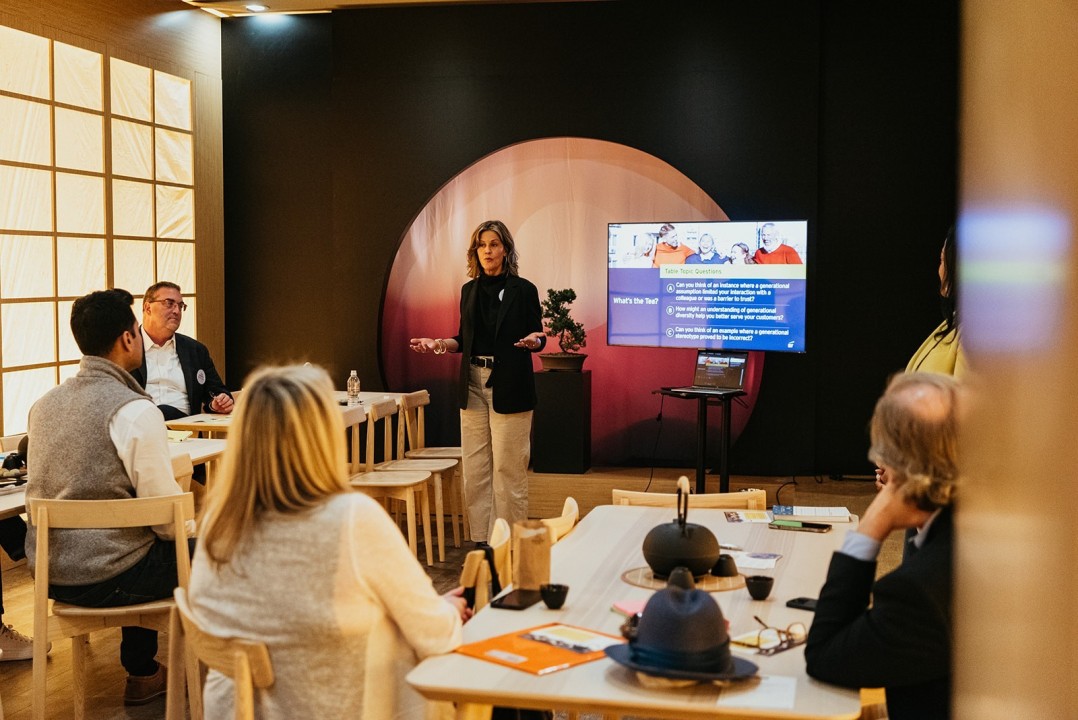
At EY’s Innovation Realized event in 2024, I led a workshop on one of the biggest issues facing leaders: the transformative effects of generational shifts. The complex landscape of intergenerational dynamics has major implications for employees and consumers — and the organizations that covet them both. Understanding these shifts, what is driving them and how to address them is critical to meet today’s business needs and to prepare for the inevitable changes ahead.
Here’s My Perspective
Discussions about generational differences often spark largely unfounded negative biases toward certain age groups. A few of the misconceptions I commonly hear are, “Boomers are technophobes,” “Millennials are self-absorbed and entitled,” or “Gen Z doesn’t want to work.” I believe as organizational leaders we have a responsibility to dismantle these stereotypes and seek a genuine understanding of generational characteristics grounded in social science, not pop culture.
Social Science vs. Pop Culture
The pop culture generational perspective is used by media outlets or marketing teams whose performance is measured by number of clicks vs. quality of content. This is the same strategy of social media influencers seeking to entertain vs. inform. Pop culture analysis has its value: predicting the next fashion trend, for example. But when applied as an assessment of generations, it lacks context and fosters divisiveness that stymies business growth. It propagates the “us vs. them” mentality far too common in generational discussions today.
The social science perspective uses generations as a framework to understand societal changes that occur over time. For example, analyzing how a Gen Xer viewed work and leisure when they were 18 years old vs. how an 18-year-old views them today. It focuses on understanding the emerging and unmet human needs resulting from these shifts that can create whitespace in the market. It helps us appreciate the distinctions that exist and can move us toward a more cohesive, multigenerational environment that propels our businesses, our workforce and our society forward to more positive outcomes.
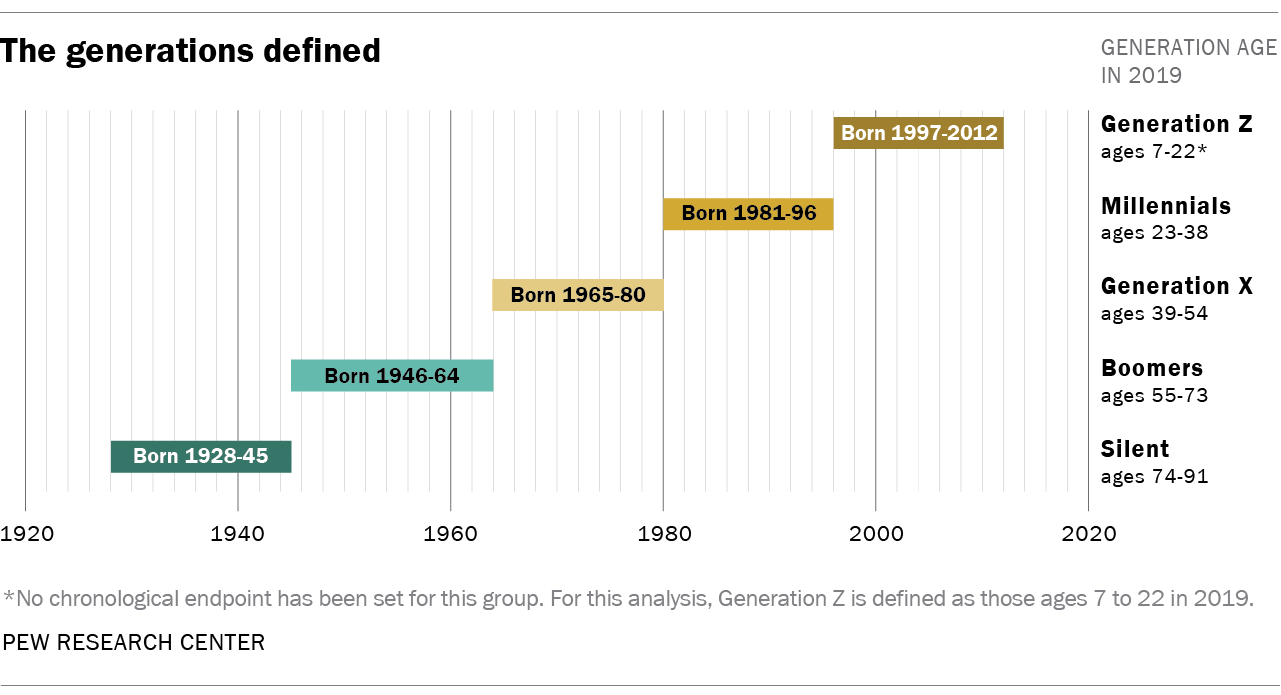
Source: Pew Research Center, “Defining generations: Where Millennials end and Generation Z begins”. (2019) Ages shown are for 2019.
Change Is Inevitable — Embrace It
Every generation, by its nature, is born from change. They are influenced by global events and their lasting effects — wars, recessions, environmental crises, technological advancements, geopolitical shifts and other factors no one could have anticipated. Even when individuals don’t always agree, the shared experience of these dynamics changes how a generational cohort comes to perceive the world — and their role within it.
Exceptional Events Forge Generational Identities
Consider Gen Z, whose members have already witnessed monumental changes. The oldest among them were toddlers when the Columbine massacre happened. School has never been a safe haven. In fact, it is often where they feel most at risk. Those oldest members entered kindergarten in the shadow of 9/11. War and the threat of terrorism are part of their norm. The collapse of global financial markets reshaped the economy in which they grew up. Then there’s a global pandemic, restricting in-person activities and socialization at different points in their lives, including years when many should have been exploring independence.
For many, this pause created a gap during a quintessential developmental phase that is the cornerstone for future confidence and resilience. When examining generational contrasts in the workplace, on the streets or at the point of sale, it’s vital for everyone — business leaders and consumers alike — to grasp the foundational experiences that shape attitudes, perceptions and behaviors.
The Influence Of Technology Expectations
Today’s workplace is a melting pot of generational experiences. Unlike the hefty manuals that accompanied the first personal computers of older generations, Gen Z’s introduction to technology was the intuitive smartphone. Gen X swapped paper maps for digital navigation at a click, while millennials pioneered the “always on” digital work life, blurring the boundaries between office and home. These shifts can shape how people communicate, learn, and draw boundaries around work. Understanding those experiences is crucial for managers to effectively engage and motivate their teams.
Redefining Work Across Ages
Each generation brings a unique view of work and values into the workplace, shaped by the events and environments that influence them during their formative years. Those events and environments affect people of all ages, but can have a particular impact on those just beginning their careers, when they’re still forming their expectations of how work and the world “should” work.
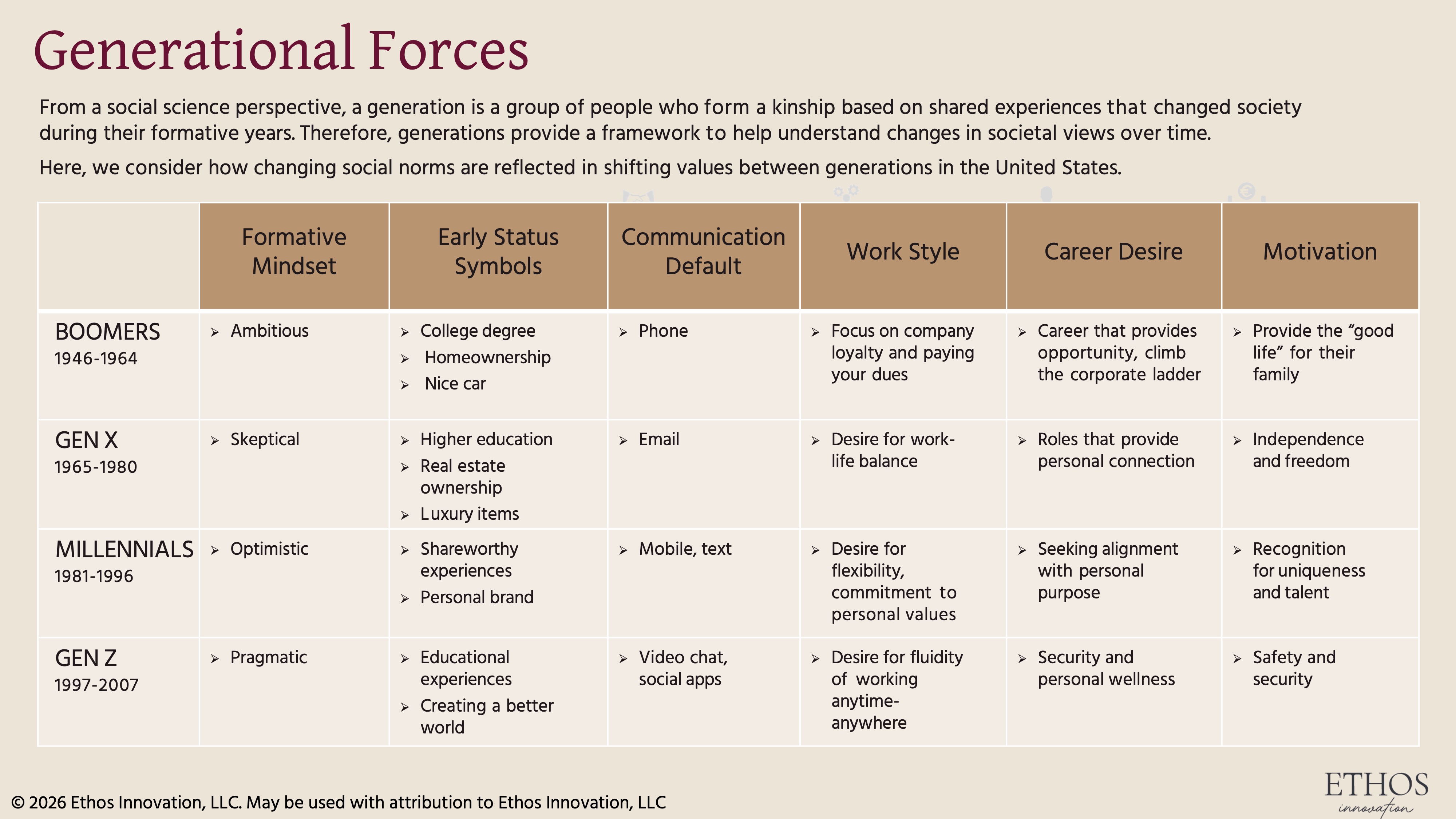
Source: Ethos Innovation, LLC, “Generational Forces” (2026). © 2026 Ethos Innovation, LLC.
When Boomers began entering the workforce in the 1960s, they did so amid postwar economic growth and profound political and social upheaval, from the civil rights movement to the Vietnam War. Stability and loyalty to one employer were often held up as signs of success, even as many young people were questioning the institutions and assumptions they had inherited.
Gen X, entering the workforce during economic uncertainty of the 1980s and the rise of corporate downsizing or restructuring, became less trusting in the concept of “employer for life.” Career shifts became acceptable behavior, as long as they didn’t happen too often.
Millennials began entering the workforce in the late 1990s, facing the dot-com bust starting in 2000 and the unknowns after 9/11. Then came the Great Recession of 2008, along with rising student debt, unemployment, and the housing crisis, with many losing faith in past concepts of wealth and status. This helped create a shift toward seeking careers with more purpose.
Gen Z, now rising in the workforce, was brought up in a world marked by crises, the prevalence of misinformation and diminishing trust, and the increasingly rapid introduction of disruptive technologies. They bring expectations for shared values, job benefits and flexibility — in addition to financial security.
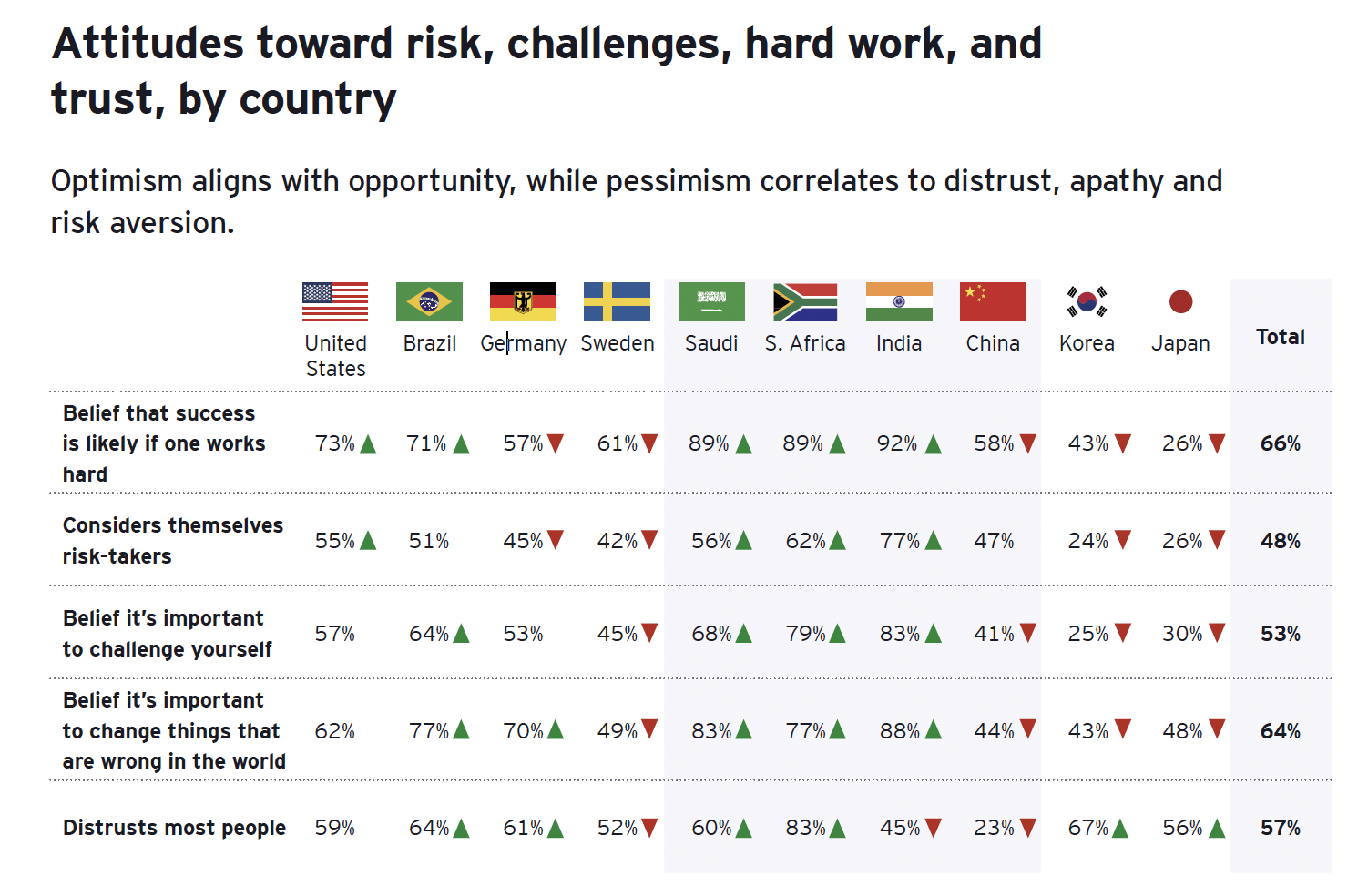
Source: EY, “The first global generation: adulthood reimagined for a changing world” (2025).
That’s a potent mix of conflicting perceptions and motivators for employers to juggle as they seek to retain talent and create work cultures that attract the best people.
Leveraging Generational Diversity For Competitive Advantage
Generational diversity is not a negative — it is the stepping-stone to uncovering future ideation and opportunity.
Each new generation brings fresh perspective, ideas and energy to the world. To get the most out of this societal evolution, start with a genuine sense of curiosity about what makes individuals within each generation tick. This includes not making assumptions about our own generation.
It also requires the ability to set aside judgement or bias, at least temporarily. I’ve found when leaders take this approach — as those who joined my workshop did — we most often discover that our commonalities far outweigh our differences.
The next time you catch yourself thinking, “That’s just blank generation,” ask: If I had come of age in their world, how might I see this differently?