
Last Friday kicked off the MBA class I am teaching over the next year at The Ohio State University Fisher College of Business.
The brief hour I had with these students reminded me how important it is to continue to push back against the monolithic pop culture portrayal of Gen Z so often shared in the media and by “thought leaders,” who simply pick up on the headlines of others.
In my head, I write a rebuttal every day to the articles or news stories I see that are unfair and inaccurate. Most often, I set it aside as an unwise use of energy and time. But these students reminded me how important it is for leaders to make decisions based on a truer understanding of who Gen Z is, and what generations as a whole represent.
Leaders are making decisions about consumers, employees, and their broader strategies based on what they believe they know about Gen Z. And those decisions are much more likely to be right when they are grounded in a real understanding of the generation and of the differences within it.
That desire to understand, rather than put all of Gen Z in the same bucket as was done with Millennials, led me to advocate for the Gen Z segmentation studies I led at EY. First in 2019. Then again in 2021. And finally in 2023.
A link to the research is below.
Gen Z is not one thing
Across three studies, we continued to see something that is often lost in the broader conversation about this generation: Gen Z is not a monolith.
In the 2019 study, we first identified the five distinct Gen Z segments. Each with different motivations, priorities, goals and dreams: Stressed Strivers, Big Dreamers, Authentic Activists, Secluded Perfectionists and Carefree Constituents.
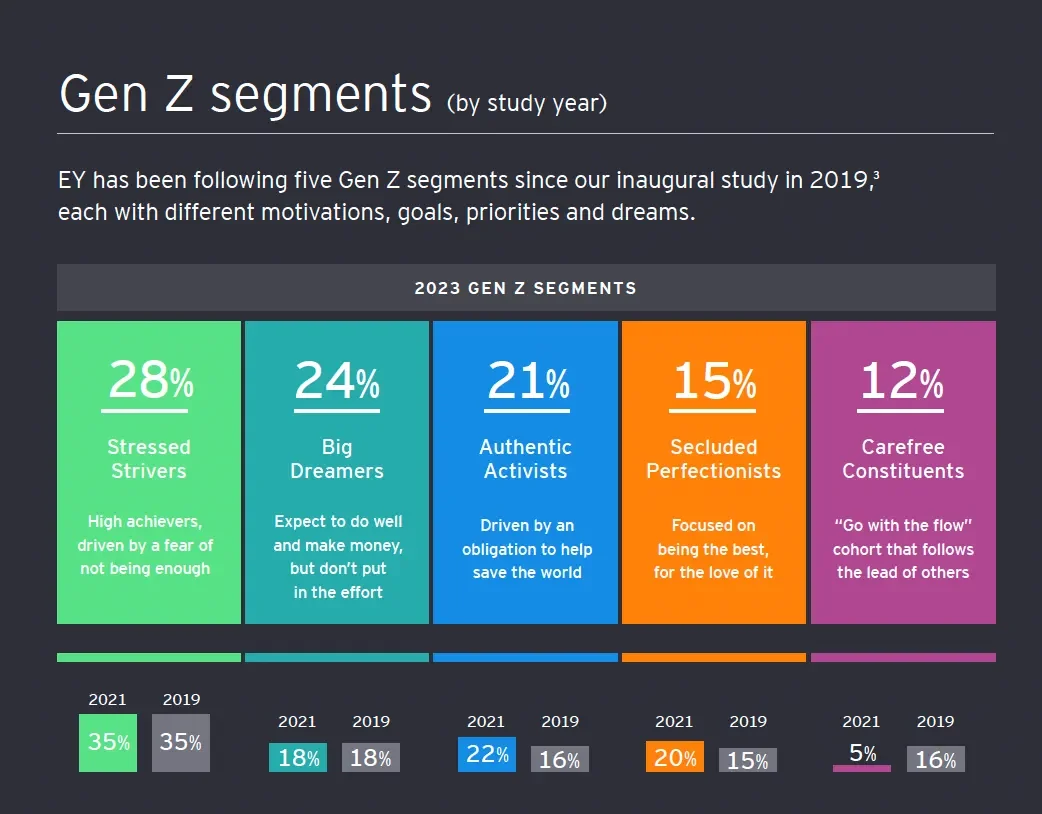
Source: EY 2023 Segmentation Study
The proportions of those segments changed over time. Big Dreamers reached their highest percentage in 2023, while other segments moved closer to their 2019 levels. The shifts matter because they reveal an evolving generation that continuously defies the stereotypes.
And that is the point I want to keep making.
When we flatten an entire generation into a handful of familiar headlines, we may grab clicks, but we lose the very differences that make the generation strategically interesting.
Three things the research revealed
1. Gen Z was becoming more financially pragmatic.
Only 31% of Gen Z rated their current financial situation as good or excellent, while 69% rated it fair or worse. More than half, 52%, said they were very or extremely worried about not having enough money. And this was in their teens!
This is not a generation simply chasing wealth for wealth’s sake. The research points to a much more pragmatic orientation toward financial independence, security and the future. The exception: Big Dreamers, who are the most wealth-oriented, but the least likely to put in the effort to get it.
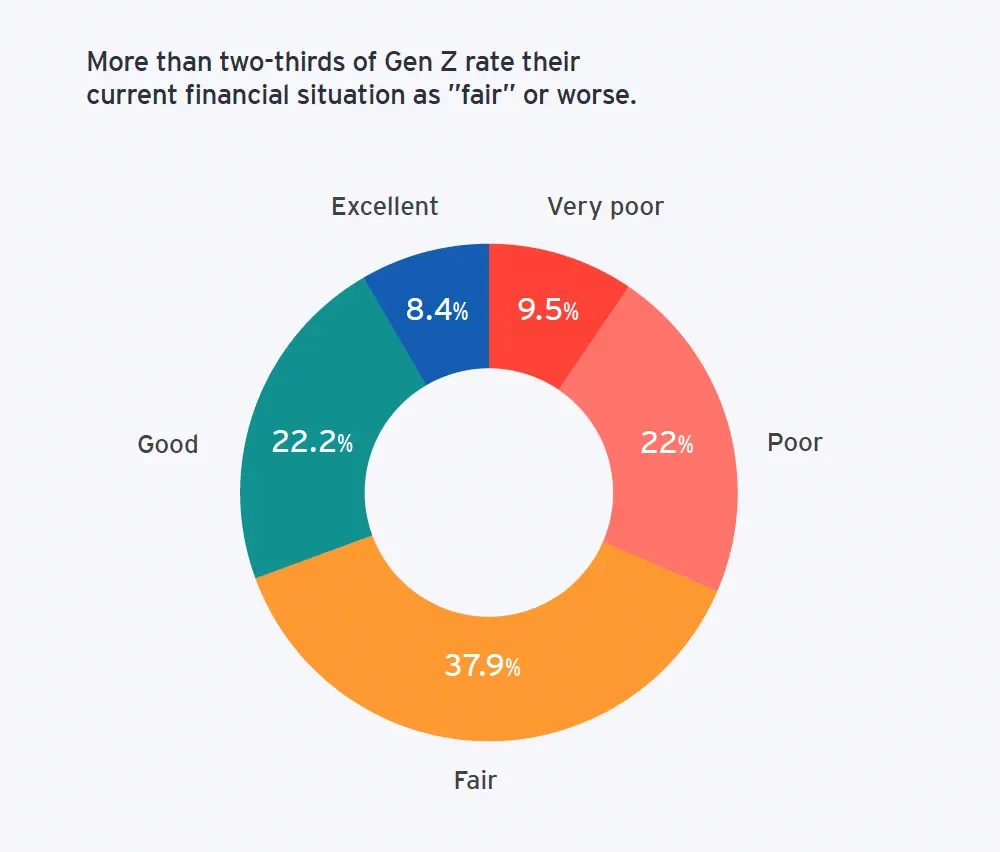
Source: EY 2023 Segmentation Study
2. Authenticity wasn’t a buzzword. It was a core value.
More than 90% of Gen Z said being authentic and true to oneself was very or extremely important.
That helps explain why Gen Z has challenged so many expectations around appearance, career paths, relationships, gender and other social norms. The research describes a generation increasingly willing to reject standards that feel outdated or inauthentic. The exception: Carefree Constituents, who are most likely to adapt to the beliefs, attitudes, or behaviors of those around them.
3. Their outlook on the future was complicated.
As a cohort, Gen Z is more pragmatic than past generations.
Worry rose across every segment between 2019 and 2023, but not at the same pace. Authentic Activists saw the sharpest climb, while Carefree Constituents stayed the most steady of the five.
They were worried. They were pragmatic. They were questioning institutions. This is especially true of the Stressed Striver segment, the segment I’ve seen most represented in the corporate environment.
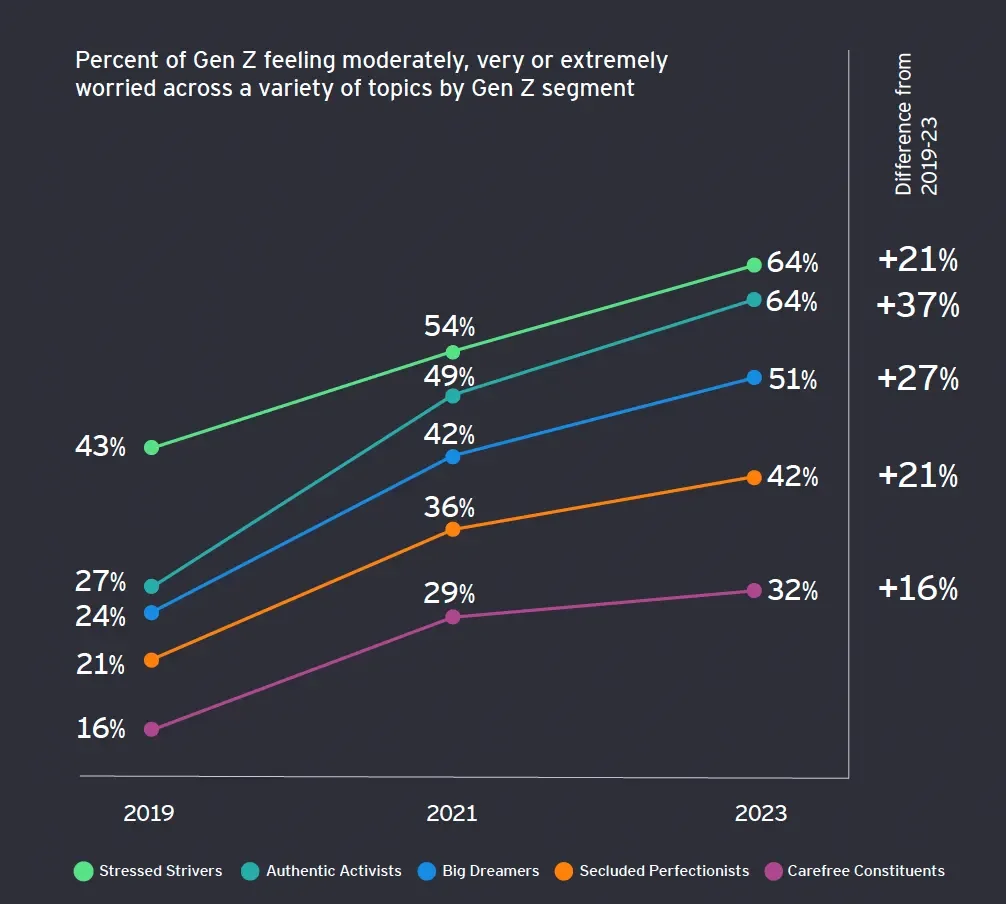
Source: EY Gen Z Segmentation Study
Why I’m sharing this now
Last Friday, sitting in that classroom, I saw each of those five segments in the room.
That was the reminder I needed.
When the most diverse generation in history is minimized to a monolith, we kind of miss the point.
And leaders surely miss the competitive advantage that can come from understanding a generational cohort from a truer vantage point than the headline.
Generations are created through systems. It’s the system they grew up in. It was the system of the community around them, the rules that they either had to abide by or decide to rebel against. Those are the basis of forming a generation.
The component we cannot look past is that there are differences within the generation, and that too often I see these things merged as if they’re the same story.
The original 2023 EY Gen Z Segmentation Study is available here.